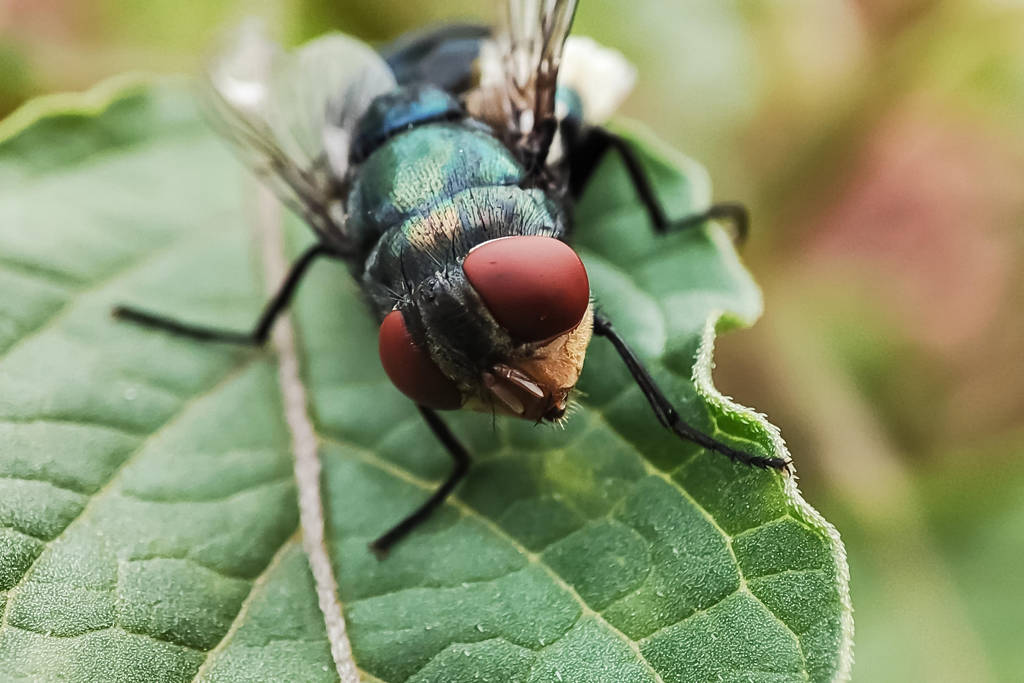
A U.S. government department unleashing millions of flies across Texas to combat a flesh-eating parasite might sound like a tinfoil-hat conspiracy, or maybe even the makings of a zombie b-film, but it’s a real thing and it isn’t exactly new. Read our article below to find out more.
New World Screwworm
The Animal and Plant Health Inspection Service of the U.S. Department of Agriculture has announced an outbreak of the New World Screwworm. The New World screwworm, or Cochiliomyia hominivorax, is a pest at best and deadly at worst.
The parasitic fly produces larvae burrow into open wounds of animals where the larvae, or maggots, then feed on the tissue resulting in serious damage and possibly death. This occurs predominately in livestock, wildlife, and pets. Only in very rare cases has it affected people.
What’s at Risk
The outbreak of the New World Screwworm poses a serious threat to the U.S. agricultural industry and more specifically the Texas cattle industry. While livestock deaths are the primary concern, infestations of NWS also involve costs regarding decreased livestock production, increased need for veterinary services, medication, and insecticide, as well as additional labor costs associated with the treatment and inspection of infested animals.
According to the APHIS NW Economic Impact Report, an NWS outbreak could result in an $1.8 billion loss for the Texas economy, costing Texas producers $732 million a year.
Why Fight Flies with Flies
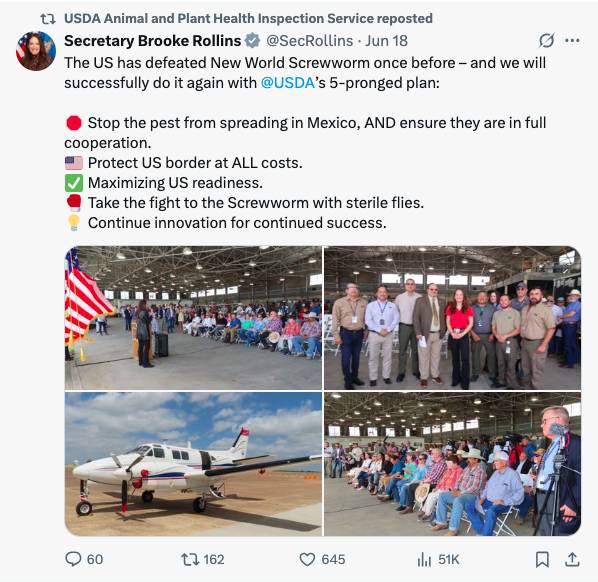
The U.S. Department of Agriculture is deploying a biological controlling technique known as Sterile Insect Technique to eradicate NWS populations. The technique involves using radiation to sterilize male screwworm flies. As female NWS flies only mate once, a sterile agent would prevent eggs from hatching. Gradually, this reduces NWS populations over time. Agencies then release the sterile NWS flies via aircraft in affected areas.
The Sterile Insect Technique is a scientifically-validated, non-toxic, and environmentally-friendly method of controlling NWS outbreaks that traces back to the 1950s and has held a strong track record since.
This past June, the USDA invested $8.5 million in a new facility in South Texas specifically to breed, sterilize, and release male NWS flies.