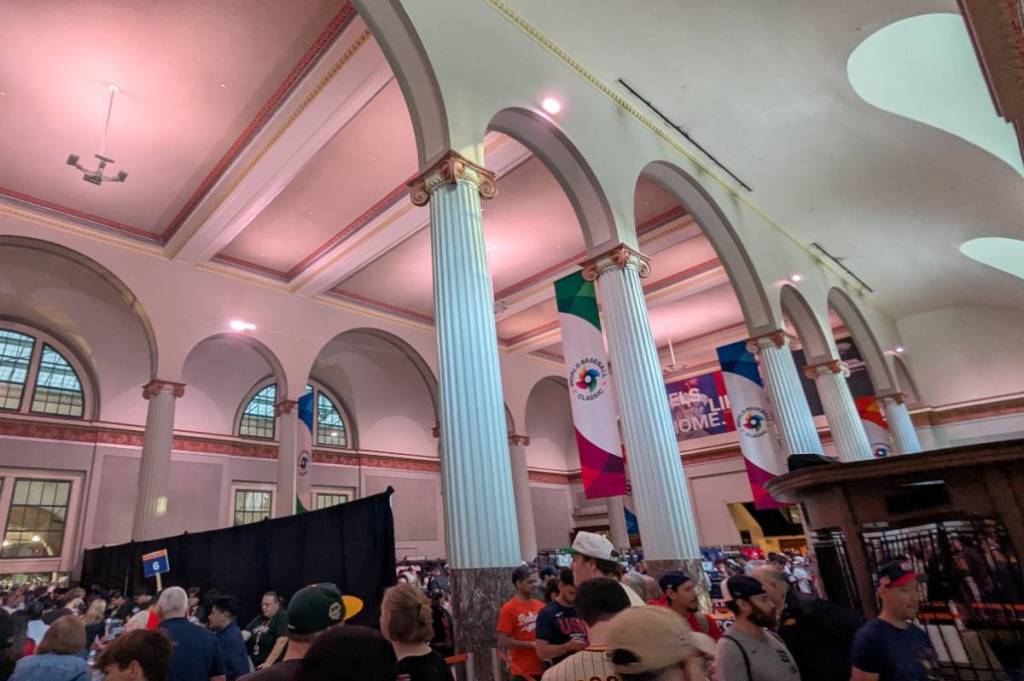

Before the baseball crowds, there were rail passengers. Before the ballpark’s retractable roof, there was a railway terminal helping connect Houston to the world beyond downtown. And 115 years after its construction in 1911, Union Station still knows how to make an entrance: its restored lobby now serves as the grand entrance to Daikin Park.
For fans heading inside, that means a trip to the ballgame can begin with a piece of Houston history. The station wasn’t simply left standing beside the stadium. It was incorporated into the ballpark, giving a former transportation landmark a very different second act.
A grand arrival in railroad-era Houston
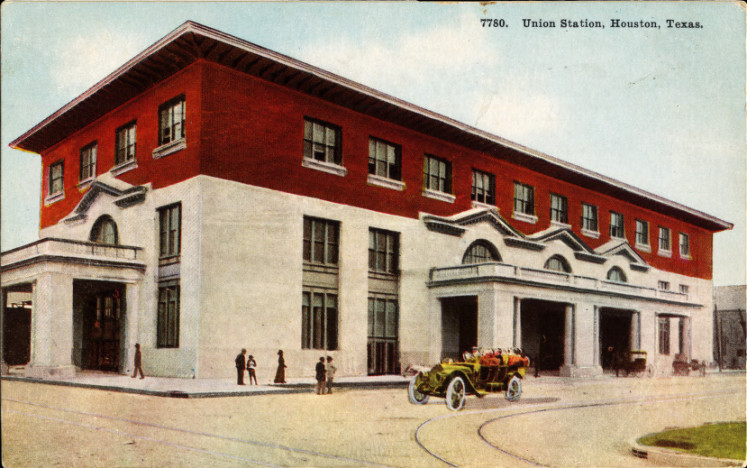
Union Station was designed by New York architectural firm Warren and Wetmore for the Houston Belt and Terminal Railway Company, a consortium of rail lines that came together in 1905 to build a shared station. The resulting building combined a passenger terminal with offices—a place for both the business of rail travel and travelers.
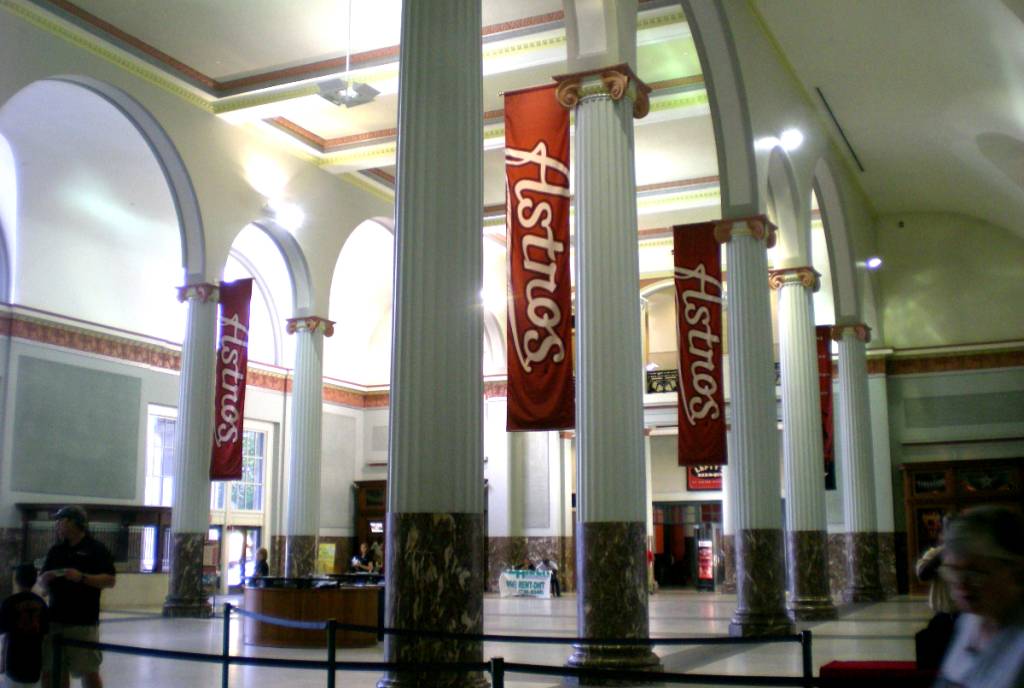
Constructed in 1911, the station brought a sense of occasion to arriving in Houston. Its lobby’s soaring ceiling and elegant columns remain defining features of the space today, which later were restored to its original grandeur.
There’s another architectural detail worth knowing about: according to the Society of Architectural Historians’ SAH Archipedia, the station’s porte-cochère—the covered entrance where passengers could arrive sheltered from the weather—retains its Guastavino tile vaulting. It’s a surviving piece of the building’s craftsmanship, tucked into a landmark now associated with baseball rather than departures.
From railway terminal to the Astros’ front door
Passenger service at Union Station ended in 1974. But the building’s story didn’t end with its railway role. In the late 1990s, plans for the “Ballpark at Union Station” made the historic terminal part of the Astros’ new downtown home, incorporating and renovating it for team offices and a ballpark entrance.
The stadium itself rose on land that had once held Union Station’s track yard and freight station. The new ballpark opened as Enron Field on March 30, 2000. Its first regular-season game followed on April 7. Through the venue’s subsequent name changes, Union Station remained part of its identity.
The grand lobby still welcomes a crowd
Today, Union Station Lobby serves as Daikin Park’s grand entrance and an event space in its own right. The Astros offer the hall for receptions and other gatherings, with a listed reception capacity of 800. Its columns and high ceiling provide a setting quite different from the concourses and seating bowl beyond.
The change in purpose is part of the appeal. A hall once built for rail passengers now welcomes baseball fans and event guests, keeping the building in use more than a century after it was constructed.
And Union Station isn’t the ballpark’s only reminder of the site’s railway history. The replica 19th-century locomotive above left field was included as a salute to Houston’s railroad roots, carrying that connection into the stadium itself.
A piece of Houston history hiding in plain sight
The next time you enter Daikin Park through Union Station, there’s a reason to look up before heading toward your seats. The grand ceiling and columns belong to a building whose history began in 1911, long before the Astros’ downtown ballpark opened in 2000.