Our neighbor, the city’s capital of Austin, Texas recently came under fire after shelling out $1.1 million on a rebrand of the city’s logo. After years of rebranding efforts, the city finally approved funding leading to a new logo and brand to replace the Austin seal used for the city for over 100 years. Suffice to say the resulting logo has not gone over well with Austinites.
This is all to say that Austin’s controversial new logo makes us consider our own. Though some of the more hardcore Houstonians might be able to draw the seal from memory, many of us might not be able to pick our seal out of a lineup. Familiarize yourself with the Houston seal here and learn more about its history and significance.
Houston Seal History
The Houston seal has been used as an emblem for the city for nearly 200 years. Four years after the city was founded, the City Council passed a resolution on February 17, 1840, that would authorize then mayor, Charles Bigelow, to “procure a seal to be styled , the seal for the City of Houston, Texas”.
The design was head by state senator and former Houston mayor, Dr. Francis Moore Jr., who was paid $50. By the next meeting, February 24, the City Council agreed to adopt Dr Moore’s design as the city seal.
According to the Houston government website, the original seal was lost until it was discovered by assistant city secretary Mrs. Margaret Westerman, the namesake of the City Hall Annex, in December 1939.
Houston Seal Imagery
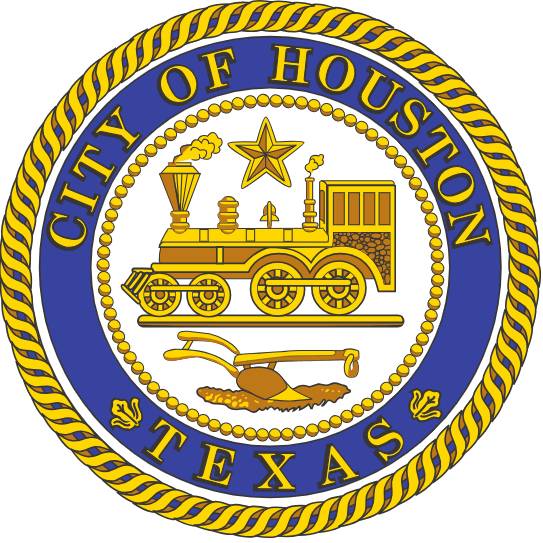
Bordered by an outer ring, the Houston seal features a legend with the inscription “City of Houston” at the top, “Texas” at the bottom laid over a blue background traditionally representing loyalty. The city’s original seal did not include “Texas”, but was later added.
Centered inside the seal is a lone star – the “symbol of the newborn nation on the west”. Below is the “Noble locomotive” representing the city’s “spirit of progress” and its historical role as a railroad hub.
Displayed beneath the locomotive, is a plow. The plow, according to the City government website, represents the state’s agricultural industry “‘from which Houston would draw her wealth – by the iron rails'”.