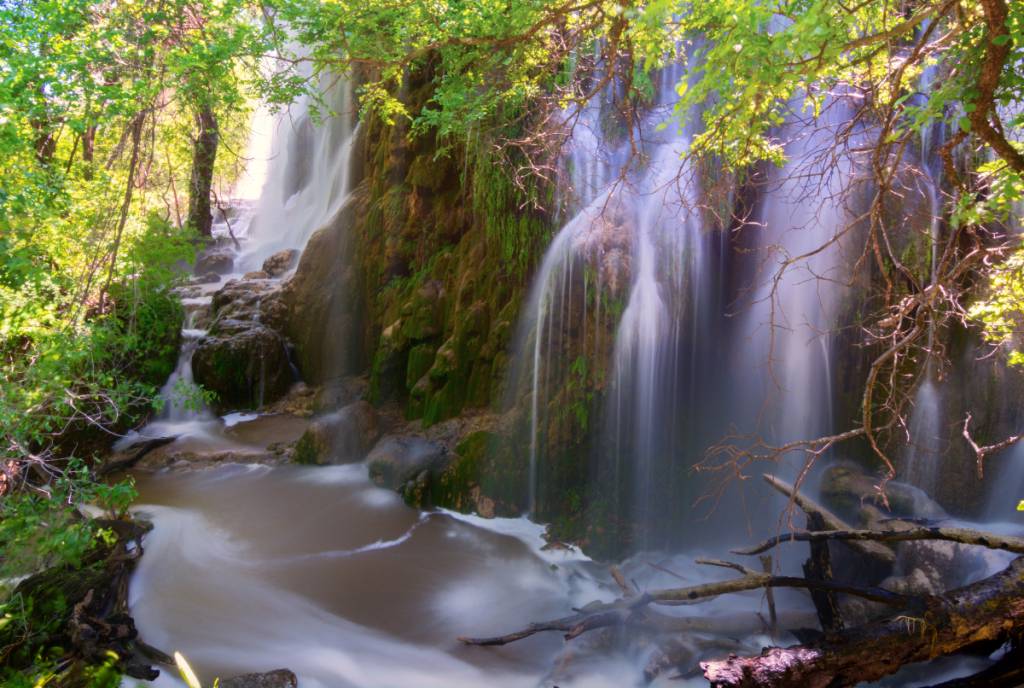

Go chasing waterfalls this summer at Colorado Bend State Park. Nestled in Texas Hill Country, the expansive state park is home to swimming holes, hike and bike trails, and one of the most breathtaking waterfalls the Lonestar State has to offer.
Colorado Bend State Park is a sprawling 5,300-acre wilderness area situated along the Colorado River in the Texas Hill Country, about two hours northwest of Austin – roughly 4.5 hours driving from Houston. Encompassing a rugged landscape of deep canyons, sinkholes, and caves, the state park offers a relatively unspoiled, back-to-nature outdoor experience. Its crown jewel is the 70-foot, spring fed Gorman Falls.
Cascading down a cliffside of ferns, moss, and lush vegetation, Gorman Falls offers an oasis and must-see for Texan wanderlust. Unlike other Texas waterfalls, which steadily erode over time, Gorman Falls is actually growing. Fed by a limestone source, Gorman Falls carries calcium carbonate, which is deposited at the base of the falls, resulting in growing travertine.
To witness the marvel, visitors must embark on a self-guided, 1.5-mile hike through Colorado State park. Be apprised, the hike is described as rocky, steep, and at its endpoint, slippery. Because the travertine formation are very fragile, the falls are roped off to swimming, wading, and/or climbing in the falls.
If you are in need of a cooldown, Colorado Bend State Park is also home to Spicewood Springs, a popular swimming hole about a 20 minute drive away from Gorman Falls. Fed by freshwater springs, Spicewood Creek forms crystal-clear, emerald pools connected by small cascading waterfalls.
The lower pool is located just a short, flat walk along the Spicewood Springs Trail where the creek empties into the Colorado River, making it easily accessible for visitors seeking an immediate, refreshing dip.
Visitors planning to swim should be prepared for a primitive natural setting. There are no lifeguards on duty, so all swimming is at your own risk. Sturdy water shoes or sports sandals with good traction are recommended, as the limestone, rocks, and travertine beds can be slippery with algae.