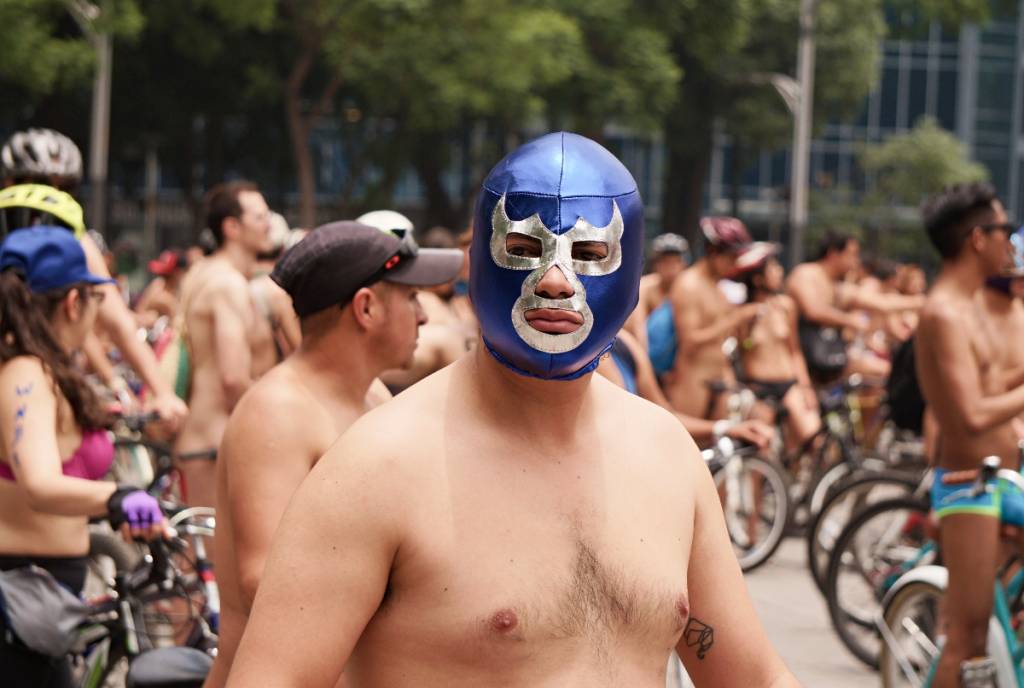

Houston’s annual naked bike ride returns this Saturday. As both a festive group pedal and awareness effort, the Houston naked bike ride expect to draw up hundreds of bare bikers riding through East Downtown.
Purpose and message
Houston’s naked bike ride has run for more than 14 years as part of the international movement, drawing dozens to thousands of riders in various states of undress. Rather than spectacle for its own sake, the Houston naked bike ride peaceful, festive demonstration with music and body paint, centered on a clear safety message.
The ride is part of the global World Naked Bike Ride movement, which uses minimal clothing as a visual metaphor for exposure and risk on the road. The 2026 theme—“Can You See Us NOW!?”—underscores that visibility-and-safety message.
“The H-Town World Naked Bike Ride is a community celebration that brings together thousands of people from diverse backgrounds. Riders participate for many different reasons—advocating for safer streets, expressing body freedom, supporting environmental causes, or simply enjoying an unforgettable evening with friends,” the official website reads.
When, where, and how to join
- Date: Saturday, September 12, 2026
- Prep time: Around 6 p.m.
- Roll-out: About 8 p.m. (exact route announced shortly before departure)
- Gathering spot: Super Happy Fun Land / Flakey’s Pizza, 3801 Polk Street, Houston 77003 (East End/East Downtown)
Participants are encouraged to arrive early, bring a bike in good working order, lights, a helmet, and water. Pre-ride activities feature body painting and community poster-making. The ride fosters a welcoming, colorful environment that highlight Houston’s creative culture. The route typically covers roughly 12 miles through East Downtown and nearby corridors.
“Bare as you dare” and local laws
The event’s global motto is “bare as you dare,” meaning full nudity is not required. Many riders choose swimsuits, underwear, body paint, or themed costumes. Because Texas and Houston have public-nudity ordinances, participation is technically “at your own risk,” which is why partial coverage is common and widely accepted by organizers.