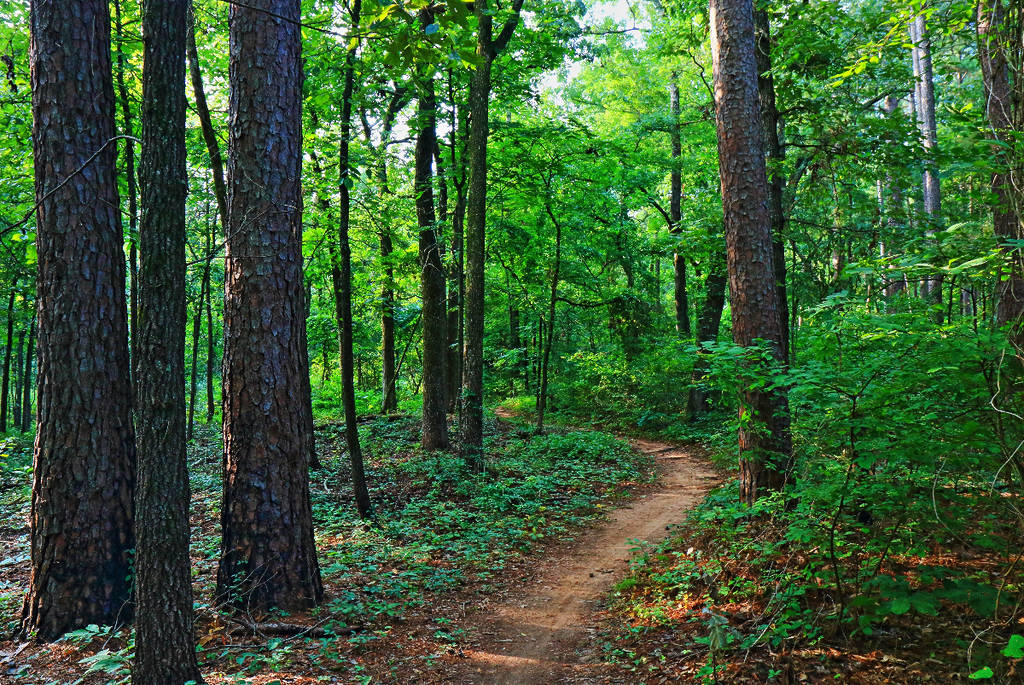
A mere hour’s drive north of the city, the Sam Houston National Forest stands as one of Texas’s four “Big Woods” gems. Spanning a massive 163,000 acres across Montgomery, San Jacinto, and Walker counties, this sprawling timberland serves as Houston’s premier backyard for rugged exploration.
The forest’s crown jewel is undoubtedly the Lone Star Hiking Trail. Stretching 96 miles through the pines, this legendary path constructed in the ’60s and ’70s offers hikers a tranquil escape into a landscape defined by meandering creeks, hidden rivers, and the serene beauty of East Texas lakes.
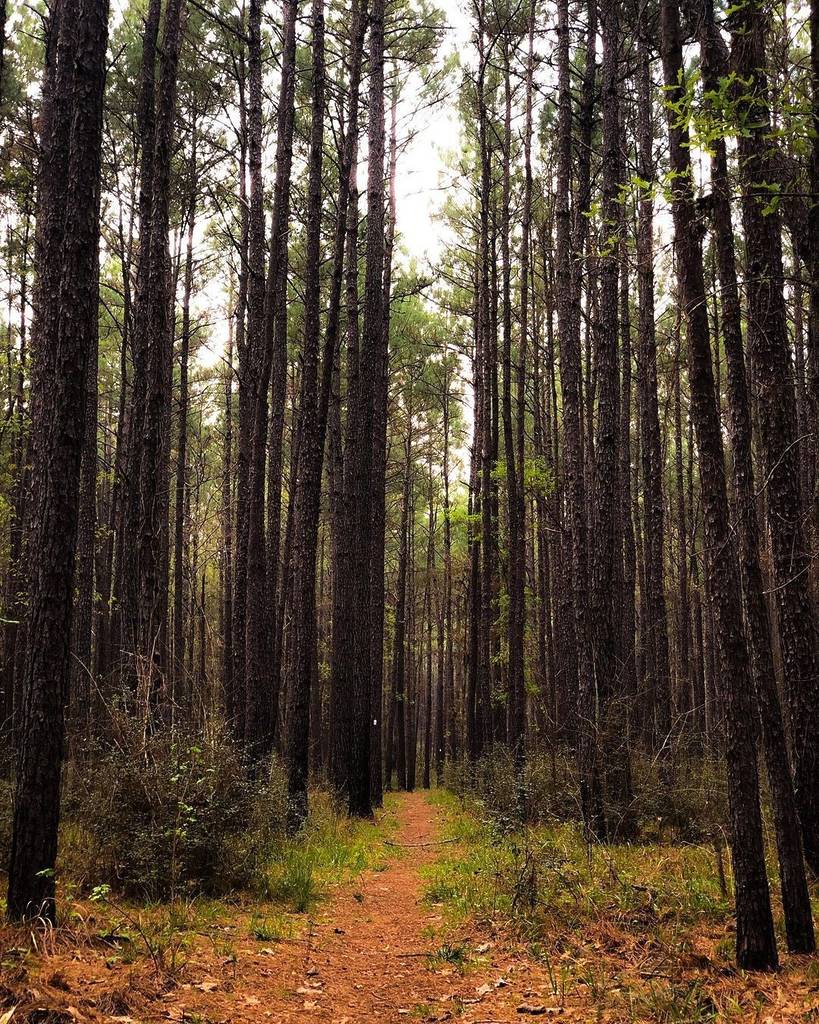
Hiking The Lone Star Hiking Trail
Whether you’re looking for a quick day hike, or a multi-day backpacking trip, the Lone Star Hiking Trail offers 96 miles at your disposal. If you take hiking loops into consideration, the trail offers 128 miles of top-notch trekking.
All along its winding route, hikers are treated to scenic natural beauty: from meandering streams, tranquil lakes, and areas rich with diverse flora and fauna. Keep an eye out for white-tailed deer, various bird species, and even the occasional wild hog.
Key scenic destinations along the Lone Star Hiking Trail include the Big Creek Scenic Area. The trail’s gem, the 1,420-acre near Cleveland and Shepherd features a vibrant display of flora and makes for a prime birdwatching area.
Hikers can experience deep woods isolation at the Little Lake Creek, a designated wilderness area with its open trail — the Little Lake Creek Loop. Other scenic hubs include the Winters Bayou Scenic Area and Double Lake & Stubblefield Recreation Areas.
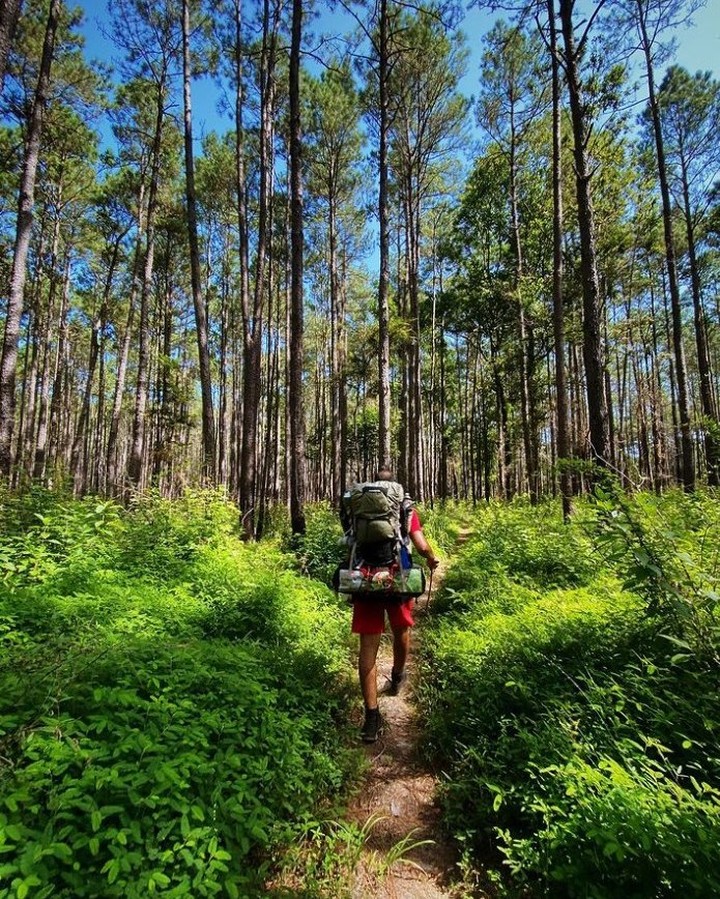
For those looking to fully immerse themselves, primitive camping is allowed virtually anywhere along the trail, with the exception of hunting season and provided you follow Leave No Trace principles. Sam Houston National Forest is also features more developed campgrounds with bathroom facilities.
How to access The Lone Star Hiking Trail
Located just 50 miles north of downtown Houston, LSHT visitors can access the trail easily via I-45 near Huntsville or I-59 (US-69) near Cleveland.
Fall, winter, and spring make for the most pleasant hiking conditions, with cooler temperatures and fewer mosquitoes. Summers (as you’re all aware) can be brutally hot and humid, requiring extra hydration and early starts.
As far as the essentials go, we recommend good hiking boots, water, and insect repellent. For longer treks, you should bring a map (physical and/or GPS-enabled) as well as all necessary backpacking gear.
While a permit isn’t required for day hiking, primitive camping requires adherence to Forest Service regulations. Check the Sam Houston National Forest website for the latest guidelines.
Lone Star Hiking Trail vs. Northeast Texas Trail
We should note, that there is some contention as far as the title of the longest hiking trail in Texas. While the Lone Star Hiking Trail is Texas’ longest trail in the traditional sense — ie. a strict hiking/backpacking trail on wooded, natural pathways, the multi-use Northeast Texas Trail is longer at 130 miles in length.
That said, NTT is a multi-use trail open to hikers, cyclists, and equestrians. Unlike natural dirt pathways, the trail is covered in various crushed stone, pavement, and gravel surfaces. The trail runs from Farmersville just outside of Dallas to New Boston.